Grading & Leveling Services in Dutchess, Putnam & Westchester County, NY
Professional Grading and Leveling Excavation Contractor
Water collecting in your yard, an uneven building site, a washed-out driveway, or a property that slopes toward your home can often trace back to one issue: the way the land is graded.
Majoco Construction provides grading and leveling services throughout Dutchess County, Putnam County, and Westchester County, NY for homeowners, contractors, property managers, and commercial properties.
Our grading work can help prepare land for new construction, correct drainage problems, create more usable lawn and landscape areas, establish driveway grades, prepare building pads, and finish sites after excavation work.
Proper grading is about much more than making dirt look smooth. The finished elevations and slopes of a property affect where rainwater travels, how a driveway performs, whether a lawn remains usable after storms, and how prepared a site is for the next phase of construction.
Majoco combines grading with excavation, earthmoving, site preparation, and drainage capabilities so the property can be shaped around the requirements of the project.
Call Majoco Construction at 845-270-2802 to request a free estimate for grading and leveling services in the Hudson Valley.
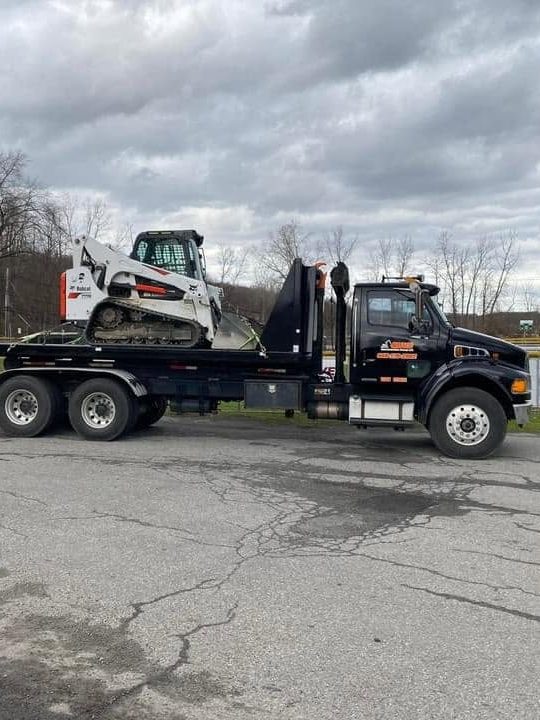
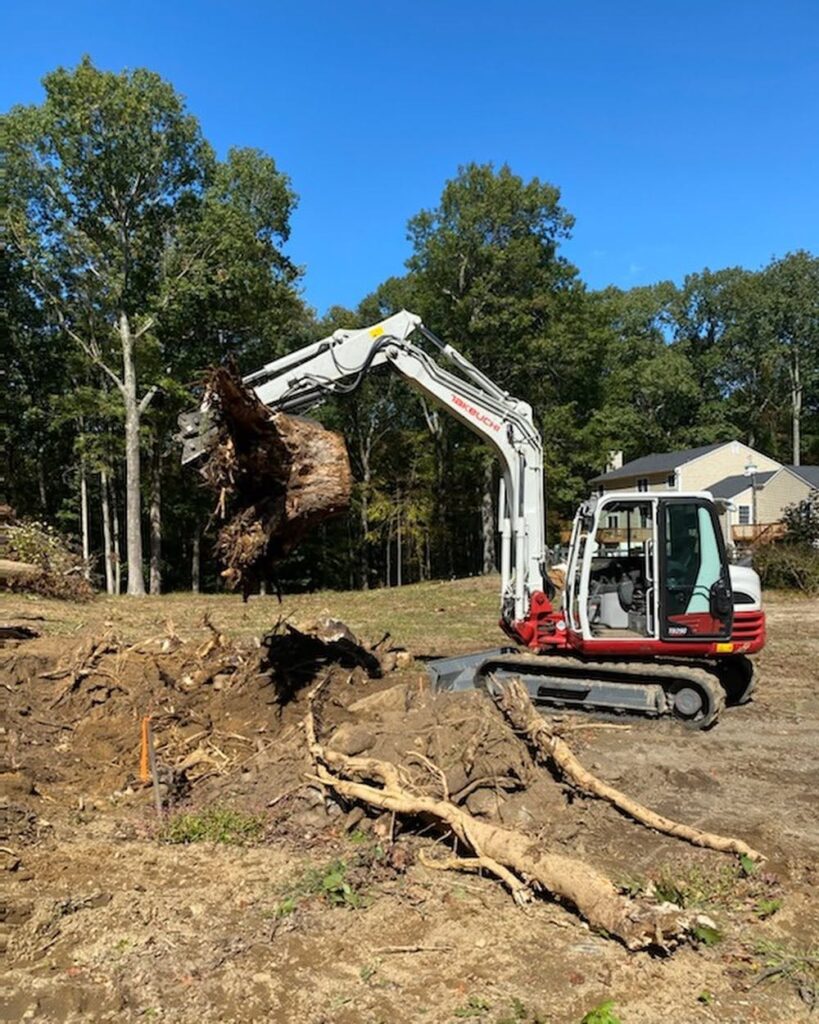
Grading & Land Leveling in the Hudson Valley
Grading is the process of reshaping the surface of a property to establish the elevations, slopes, contours, and drainage patterns required for the intended use of the land.
Depending on the project, grading may involve cutting down high areas, filling low areas, relocating soil, importing suitable material, compacting fill, creating drainage swales, preparing a building area, or producing the final surface needed for grass, gravel, pavement, landscaping, or construction.
Land leveling does not necessarily mean making a property perfectly flat.
In many situations, a properly finished yard, driveway, or building site needs a deliberate slope so rainwater moves toward an appropriate drainage area instead of collecting in low spots or flowing toward structures.
Majoco provides grading as a standalone service and as part of larger excavation and site work projects, including:
- Site preparation
- Drainage improvements
- Land clearing
- Foundation excavation
- New construction
- Driveway preparation
- Septic excavation
- Pool excavation
- Utility work
- Property restoration
Residential Grading & Leveling Services
Every property has different elevations, drainage conditions, access limitations, soil conditions, existing structures, and intended uses.
The correct grading approach depends on what the land needs to accomplish when the work is complete.
Residential Property Grading
Residential grading reshapes areas around an existing home or property to improve usability, drainage, access, or preparation for another project.
A residential grading project may involve eliminating low areas, modifying slopes, redistributing soil, correcting grades around structures, or creating a better transition between different sections of the property.
Homeowners often consider regrading when an existing yard was never finished correctly, a previous construction project altered drainage, or portions of the property are difficult to use.
Yard & Lawn Grading
An uneven yard can create problems beyond appearance.
Low areas may remain saturated after storms, steep transitions can make mowing difficult, and poorly shaped surfaces can direct runoff into areas where it should not go.
Majoco can reshape yard areas and perform finish grading in preparation for topsoil, seed, sod, landscaping, or other improvements.
The goal is not always a completely flat lawn. The finished grade should support the intended use of the yard while maintaining appropriate drainage.
Drainage Grading & Property Regrading
Sometimes the existing shape of a property contributes directly to a water problem.
Common issues include:
- Water collecting behind a home
- Runoff traveling toward a foundation
- Saturated low spots
- Water crossing a driveway
- Erosion on sloped areas
- Muddy lawn sections
- Runoff moving from an uphill portion of the property
Corrective grading can modify the way surface water moves across the land.
Where grading alone is not sufficient, it may be combined with swales, drainage pipe, French drains, catch basins, culverts, or other drainage improvements.
Rough Grading
Rough grading establishes the general elevations and shape of a construction site before finish work begins.
This phase may include substantial earthmoving, cutting down high sections, filling low sections, preparing slopes, establishing building areas, and creating the general drainage pattern of the site.
Rough grading is commonly performed during new home construction, additions, garages, commercial projects, driveway construction, and larger site development projects.
Finish Grading
Finish grading creates the final surface after the major excavation and earthmoving are complete.
Small elevation adjustments can make a significant difference at this stage.
Finish grading can prepare a site for:
- Seed or sod
- Topsoil
- Landscaping
- Gravel
- Driveways
- Walkways
- Patios
- Construction completion
A carefully finished surface helps transition the site from excavation to the property’s final use.
Building Pad Preparation
Homes, garages, barns, sheds, additions, and other structures require properly prepared areas before construction can move forward.
Depending on the plans and site conditions, building pad preparation may involve excavation, removal of unsuitable material, placement of appropriate fill, compaction, and grading to required elevations.
Majoco can perform excavation and grading work according to applicable site plans, specifications, and project requirements.
Driveway Grading
Driveway performance depends heavily on grade and drainage.
Improper slopes can allow water to travel directly down a driveway, cut channels through gravel, collect in depressions, or saturate the base.
Majoco provides grading for:
- Gravel driveways
- New driveway preparation
- Existing driveway correction
- Construction entrances
- Private access roads
- Parking areas
Depending on the problem, work may involve reshaping the driving surface, restoring the crown or cross-slope, correcting surrounding grades, or integrating drainage features.
Grading for New Construction
Grading plays an important role before, during, and after construction.
Majoco provides grading for projects involving:
- New homes
- Garages
- Additions
- Barns
- Sheds
- Patios
- Pools
- Driveways
- Commercial buildings
- Landscaping improvements
Early grading establishes the general site. Final grading prepares the property for its completed use.
Grading After Excavation
Excavation frequently leaves disturbed soil, trenches, stockpiled material, or uneven surfaces that need to be restored.
After septic, utility, foundation, drainage, pool, or other excavation work, Majoco can regrade disturbed areas and prepare them for lawn restoration, gravel, landscaping, or the next phase of construction.
Commercial Site Grading
Commercial grading may involve larger quantities of material and tighter coordination with engineered plans, contractors, utilities, drainage infrastructure, and construction schedules.
Majoco provides excavation and grading capabilities for commercial properties requiring site development, building preparation, parking areas, access roads, drainage work, or general earthmoving.
Slope Correction
A property does not have to be flat to be functional.
In many cases, slopes are necessary for proper drainage. Problems occur when a slope is too steep for the intended use, directs water toward the wrong location, creates erosion, or makes an area difficult to maintain.
Regrading may help soften transitions, improve accessibility, redirect runoff, or create more usable areas while maintaining necessary drainage.
Erosion & Runoff Correction
Visible channels in soil, washed-out gravel, exposed roots, and displaced topsoil can indicate that stormwater is moving across the property too aggressively.
Grading can sometimes slow, redirect, or better distribute surface runoff.
Depending on the site, additional drainage or stabilization measures may also be appropriate.
Topsoil Placement & Final Site Preparation
Once major earthmoving is complete, the surface may require additional preparation before landscaping.
Finish work can include establishing final elevations, preparing transitions, placing suitable material, smoothing the surface, and leaving the property ready for the next contractor or landscaping phase.
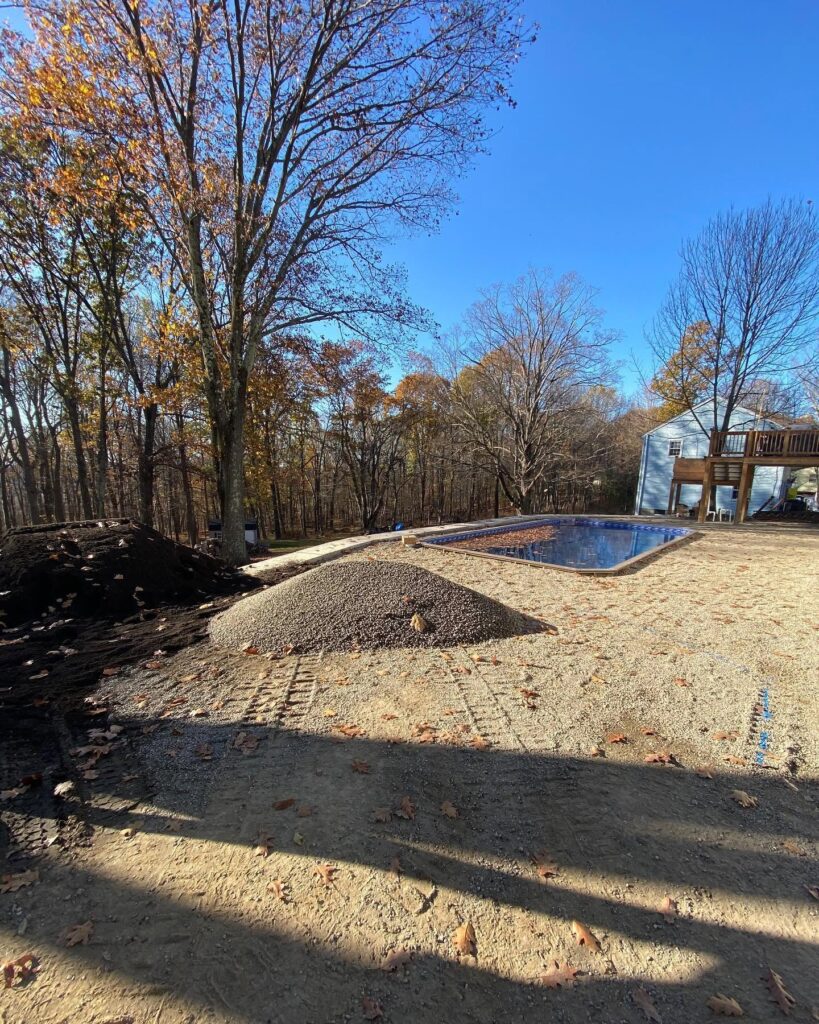
Can Grading Fix Drainage Problems?
Grading is one of the first things that should be evaluated when water repeatedly collects or moves in the wrong direction across a property.
Water follows elevation.
If the surface around a house, lawn, driveway, or construction site directs water toward a low area, that water will continue moving there unless the grade or drainage system changes.
Common warning signs include:
- Standing water after storms
- Persistent muddy areas
- Water collecting near a foundation
- Runoff flowing toward the home
- Channels forming through lawns
- Gravel washing out of driveways
- Soil eroding from slopes
- Water traveling across walkways
- Downspouts draining into saturated areas
- Water moving from an uphill portion of the property
One grading approach is to establish positive drainage, meaning the surface is shaped so water moves away from a structure or problem area toward an appropriate drainage location.
However, grading does not solve every drainage problem.
Some properties require a combination of grading and drainage infrastructure.
Drainage Swales
A shallow graded channel can help intercept and direct surface runoff across a property.
French Drains
A subsurface drainage system may be appropriate where persistent subsurface moisture contributes to wet conditions.
Catch Basins
Catch basins can collect surface runoff at strategic low points and move it through underground drainage piping.
Drainage Pipe
Solid drainage piping may be used to carry collected water to an appropriate discharge location.
Culverts
Driveways and access areas sometimes require culverts to maintain a drainage path beneath the driving surface.
Soil & Slope Stabilization
Steeper areas may require additional measures to reduce erosion after grading.
The correct solution depends on where the water originates, how it travels across the property, available elevations, soil conditions, existing drainage systems, and where the water can appropriately go.
Majoco can evaluate the excavation, grading, and drainage components of the project and determine whether reshaping the property, adding drainage infrastructure, or combining approaches makes sense.
Grading & Leveling for New Construction
Grading starts long before the final lawn is installed.
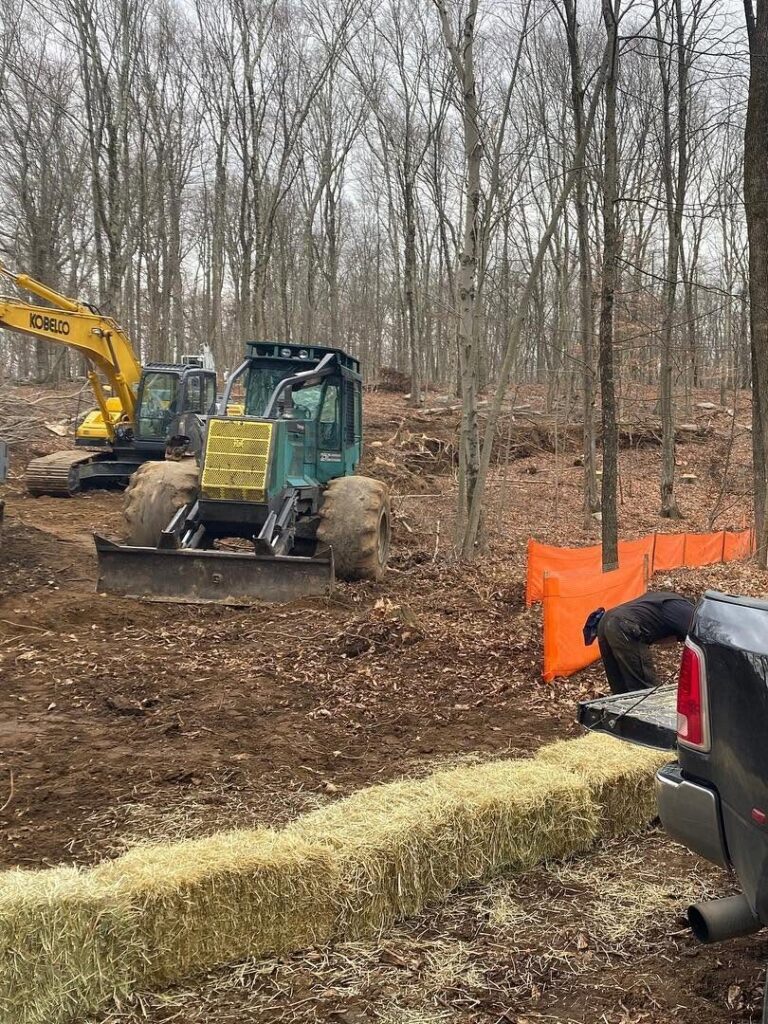
On a construction site, land may need to be cleared, excavated, cut, filled, compacted, and reshaped multiple times as the project progresses.
Rough grading creates the major site elevations and general contours.
This may include preparing the building area, managing excavated material, developing access, shaping larger slopes, and establishing the basic drainage pattern.
Finish grading occurs later, when the site is brought closer to final elevations and prepared for landscaping, driveways, lawn installation, pavement, or other finished improvements.
Projects that commonly require grading include:
- New houses
- Home additions
- Detached garages
- Barns and agricultural buildings
- Sheds
- Pools
- Patios
- New driveways
- Commercial buildings
- Landscape renovations
Because Majoco performs excavation, land clearing, site preparation, drainage work, and grading, multiple phases of site work can be coordinated within the same project.
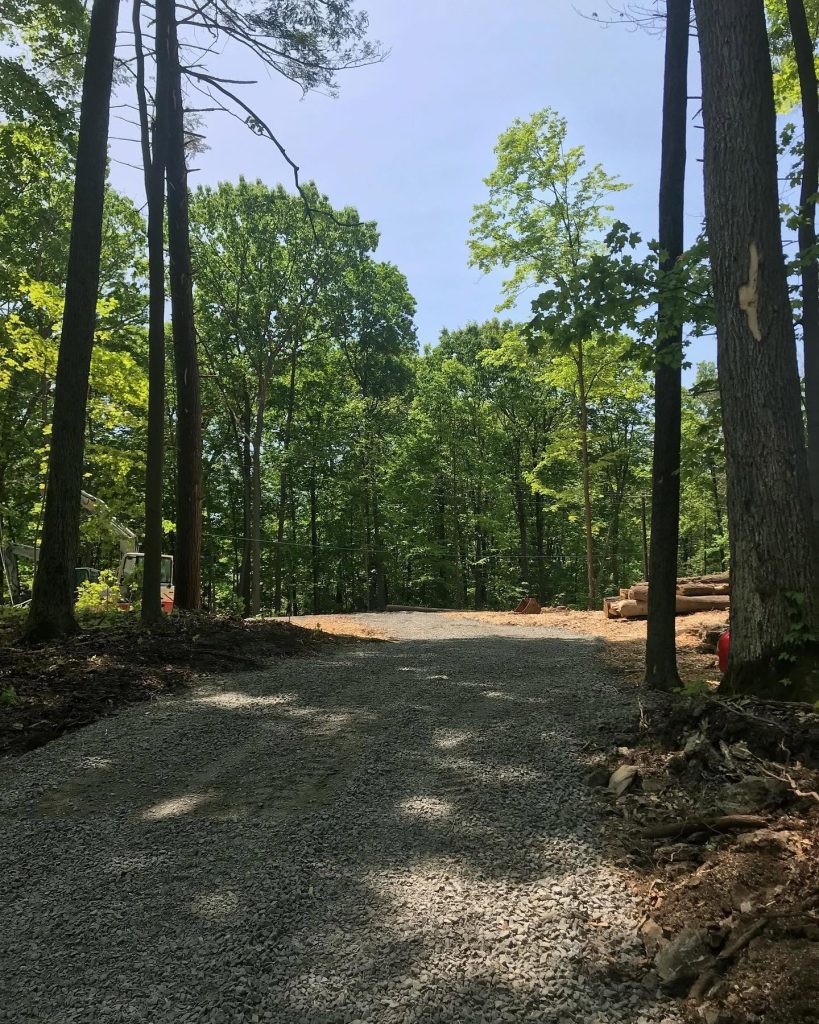
Our Grading Process
Every grading project is different, but a typical project may involve the following steps.
Property Evaluation
The first step is understanding the existing elevations, slopes, drainage patterns, access, surrounding improvements, and condition of the work area.
Understanding the Intended Use
A yard, building site, gravel driveway, drainage project, and commercial pad each require different finished conditions.
The final use helps determine how the site should be shaped.
Reviewing Existing Drainage Patterns
Before changing a grade, it is important to understand where water currently comes from and where it travels during storms.
Changing one section of a property without considering surrounding elevations can simply move a drainage problem somewhere else.
Accounting for Utilities and Existing Features
Underground utilities, wells, septic systems, foundations, retaining walls, driveways, neighboring properties, mature trees, and existing drainage systems can all affect the work.
Establishing Target Elevations
Where project plans, surveys, or engineered elevations apply, grading work can be performed according to those requirements.
For other projects, the desired use and drainage conditions help determine the grading objectives.
Cutting High Areas
High sections may need to be excavated or reduced to create the required elevations.
Filling Low Areas
Suitable material may be placed where elevation needs to be increased.
The type and amount of material depend on the application.
Placing and Shaping Material
Soil and aggregate are distributed to establish the required surface contours and transitions.
Compacting Where Required
Proper compaction is important in areas supporting driveways, building pads, structures, or other improvements where settlement can create future problems.
Creating Appropriate Slopes
The property is shaped to support its intended use while providing appropriate drainage.
Integrating Drainage Features
When the project includes drainage infrastructure, swales, culverts, piping, catch basins, or other components are incorporated with the overall grading plan.
Finish Grading
The final surface is shaped and smoothed in preparation for lawn installation, landscaping, gravel, pavement, or construction completion.
Why Hudson Valley Properties Can Be Challenging to Grade
Dutchess, Putnam, and Westchester counties include a wide variety of landscapes, from relatively open properties to steep hillsides, wooded lots, established suburban neighborhoods, and sites with significant elevation changes.
One property may have deep soils while another encounters stones, dense material, fill, or bedrock much closer to the work area.
That variability matters.
Grading projects throughout the Hudson Valley may need to account for:
- Sloping terrain
- Rocky or stony ground
- Variable depth to bedrock
- Poorly draining areas
- Significant elevation differences
- Mature trees and roots
- Existing stone walls
- Septic systems
- Private wells
- Underground utilities
- Retaining walls
- Narrow equipment access
- Existing homes and landscaping
- Driveway drainage
- Stormwater runoff
- Freeze and thaw conditions
Grading an open building lot in Dutchess County can present a very different challenge from correcting drainage around an established home in Yorktown, reshaping a wooded property near Carmel, or improving a driveway on a sloped parcel in Pawling.
Hudson Valley grading should not be approached as simply moving soil from one side of the property to another.
The finished elevation, drainage path, material, compaction, equipment access, existing improvements, and intended use all need to work together.
Grading vs. Leveling: What Is the Difference?
The terms are often used interchangeably, but they describe slightly different objectives.
Grading means reshaping land to create specific elevations, slopes, and contours.
Leveling typically refers to smoothing or creating a more even surface.
A common misconception is that a professionally graded property should be perfectly flat.
That is rarely the goal.
A yard can look level while still maintaining a gradual slope that helps water drain. A building pad may require highly controlled elevations, while surrounding land needs to slope away appropriately. A gravel driveway may require a crown or cross-slope rather than a flat surface.
Good grading creates the right shape for the intended use, not necessarily the flattest possible surface.
Grading vs. Excavation
Excavation and grading are closely related but serve different purposes.
Excavation generally involves digging, removing, relocating, or exposing earth and other material.
Examples include digging a foundation, excavating a pool, opening a utility trench, or removing unsuitable soil.
Grading focuses on establishing the elevations and surface contours of the land.
Many projects require both.
A new home site may require:
- Land clearing
- Excavation
- Foundation preparation
- Utility trenching
- Backfilling
- Rough grading
- Drainage work
- Finish grading
Majoco’s excavation capabilities allow grading to be incorporated into the complete site work process when needed.
Why Proper Grading Matters
Poor grading can affect much more than the appearance of a yard.
Depending on site conditions, improperly directed surface water can contribute to:
- Standing water
- Muddy lawn areas
- Foundation moisture
- Wet basement conditions
- Landscape erosion
- Washed-out topsoil
- Driveway deterioration
- Gravel displacement
- Ice accumulation
- Difficult mowing
- Unusable sections of property
- Drainage conflicts between neighboring areas
The objective of grading is to create a property that functions properly for the intended use while managing surface water in a sensible way.
For new construction, grading also helps establish the foundation for everything that follows.
Why Choose Majoco Construction for Grading & Leveling?
Grading frequently intersects with excavation, drainage, site preparation, and construction.
Majoco Construction provides these related capabilities throughout the Hudson Valley, allowing grading work to be considered as part of the larger site rather than as an isolated task.
Property owners and contractors can turn to Majoco for:
- Residential and commercial grading
- Excavation and earthmoving
- Site preparation
- Drainage-focused grading
- Rough and finish grading
- Building pad preparation
- Driveway grading
- Land clearing
- Foundation excavation
- Utility trenching
- Septic excavation
- Pool excavation
Majoco is fully insured and provides free estimates for projects throughout Dutchess County, Putnam County, and Westchester County.
Whether the project starts with an uneven backyard or an undeveloped building site, the goal is to create the elevations, drainage, and finished surface the property needs for what comes next.
Grading Contractors Serving Dutchess County, NY
Majoco provides grading and leveling throughout Dutchess County for residential, commercial, excavation, drainage, and new construction projects.
Service areas include communities such as Poughkeepsie, Wappingers Falls, Fishkill, East Fishkill, Hopewell Junction, Beacon, Hyde Park, Rhinebeck, Pawling, Dover, LaGrange, Pleasant Valley, and surrounding areas.
From correcting yard drainage to preparing new building sites and driveways, Majoco provides excavation and grading services for properties throughout Dutchess County.
Grading Contractors Serving Putnam County, NY
Majoco provides property grading, land leveling, drainage grading, and site preparation throughout Putnam County.
Service areas include Carmel, Mahopac, Brewster, Patterson, Putnam Valley, Southeast, Kent, Cold Spring, and neighboring communities.
Putnam County’s combination of wooded properties, elevation changes, established neighborhoods, and rural sites can make careful planning especially important when earth is being moved or drainage patterns are changing.
Grading Contractors Serving Westchester County, NY
Majoco provides grading and excavation services throughout Westchester County.
Service areas include Yorktown, Somers, Cortlandt Manor, Bedford, Mount Kisco, Chappaqua, Armonk, North Salem, White Plains, Peekskill, and nearby communities.
Services range from residential yard regrading and driveway work to construction grading, drainage improvements, and larger site preparation projects.
Don’t see your town listed? Contact Majoco Construction to confirm service availability for your Hudson Valley property.
Request a Free Grading & Leveling Estimate
Whether you’re dealing with standing water, preparing for construction, correcting an uneven yard, rebuilding a driveway, or finishing a property after excavation, the right grade can make a major difference in how the site functions.
Majoco Construction provides grading, leveling, excavation, site preparation, and drainage services throughout Dutchess County, Putnam County, and Westchester County, NY.
Tell us what is happening on your property and what you want the finished site to accomplish.
Call Majoco Construction at 845-270-2802 to request a free estimate.
(845)270-2802
Frequently Asked Questions About Grading & Leveling
How much does property grading cost in the Hudson Valley?
There is no single price that applies to every grading project. Cost depends on the size of the work area, amount of material that needs to be moved, slope, equipment access, soil and rock conditions, drainage requirements, whether material needs to be imported or removed, compaction needs, and the desired finished surface.
Majoco provides free estimates after reviewing the requirements of the property and project.
How do I know if my yard needs to be regraded?
Common signs include standing water, low spots that remain wet, visible erosion, water flowing toward the house, sections of lawn that are difficult to use, or runoff repeatedly damaging landscaping or gravel areas.
A site evaluation can help determine whether the existing grade is contributing to the problem.
Can grading fix standing water in my yard?
Sometimes.
If standing water is caused primarily by the shape of the surface, regrading may create a better path for runoff.
However, saturated soil, groundwater, inadequate discharge areas, or other conditions may require additional drainage measures.
The best solution may involve grading, drainage infrastructure, or a combination of both.
Can grading help move water away from my foundation?
Correcting the surface slope around a structure can help direct runoff away from the foundation when improper grade is contributing to the problem.
Foundation water issues can have multiple causes, so grading should be considered as one component of the property’s overall drainage conditions.
What is the difference between grading and land leveling?
Grading establishes specific elevations, slopes, and drainage contours.
Leveling generally creates a smoother or more even surface.
The two often occur together.
Properly leveled land is not always perfectly flat. Some intentional slope may be required so water drains correctly.
Does my property need to be perfectly level?
Usually not.
Completely flat ground can hold water if there is no effective drainage path.
The appropriate finished surface depends on the project’s intended use. Lawns, driveways, building areas, and landscapes often require different slopes and elevations.
Can you grade a steep property?
Many sloped properties can be graded, but the feasibility and approach depend on the degree of slope, soil and rock conditions, equipment access, drainage, nearby structures, property boundaries, and the desired final use.
Significant slope modifications may also require engineered plans or approvals depending on the project.
Does Majoco provide grading after excavation?
Yes.
Grading commonly follows foundation excavation, septic work, utility trenching, pool excavation, drainage installation, and other projects that disturb the existing surface.
Rough or finish grading can prepare those areas for landscaping, gravel, construction, or restoration.
Can you grade land before installing a new lawn?
Yes.
Finish grading helps create a smoother surface and establish appropriate drainage before topsoil, seed, sod, or landscaping is installed.
Correcting major elevation or drainage problems before lawn installation can help avoid having to disturb the new lawn later.
Can Majoco prepare a building pad?
Majoco provides excavation, grading, and building site preparation.
Requirements vary by project, and work involving engineered elevations or specifications should follow applicable construction documents and site plans.
Do you grade gravel driveways?
Yes.
Driveway grading can reshape the driving surface, address depressions or washouts, improve surface drainage, and prepare areas for additional aggregate when required.
Surrounding drainage may also need to be addressed if runoff from the property is contributing to repeated driveway damage.
Can you regrade around an existing home?
In many cases, yes.
Existing homes require careful consideration of foundation elevations, doors, patios, walkways, utilities, landscaping, septic components, drainage outlets, and neighboring property conditions.
The amount of grade that can be changed depends on the particular site.
Does grading require a permit in New York?
Requirements vary by municipality and by the scope of work.
Larger earth disturbance projects, significant changes to drainage, work near wetlands or waterways, or projects associated with new construction may be subject to local or state requirements.
Property owners should confirm applicable requirements for their project before work begins.
How long does a grading project take?
Project duration depends on the size of the site, quantity of earthmoving, accessibility, drainage work, soil and rock conditions, weather, material delivery or removal, and other construction requirements.
A small residential grading project may take significantly less time than a complete construction site or commercial grading project.
Where does Majoco provide grading services?
Majoco Construction serves communities throughout Dutchess County, Putnam County, and Westchester County, New York, including Fishkill, Hopewell Junction, Poughkeepsie, Pawling, Carmel, Mahopac, Brewster, Patterson, Yorktown, Somers, Bedford, Cortlandt Manor, and surrounding Hudson Valley communities.